Last updated September 24, 2026
New windows and doors improve comfort, cut energy bills and add long-term value to your home. Sightline Windows & Doors Miramar pairs proven product lines with our own installing crews for lasting performance - and a price we put in writing.
1. Choose your installer
The unit is half the job - the install is the other half. Our own background-checked crews measure, set, seal and insulate every opening, and they know the lines we quote inside and out because they install them every week.
2. Select the right products
Compare styles, materials and glass packages side by side until the fit is right for your rooms, your budget and your goals. The product-line comparison below is the place to start.
3. Prepare your home for install
Before install day we walk you through a short checklist - furniture pulled back, treatments down, a clear path to each opening - so install day is watch-it-happen, not scramble.
Compare the Lines We Quote
Every project is priced on the same lines, side by side - the price indicators below are relative, and your consultant shows exact numbers on your actual openings.
PGTThe line Florida homeowners arrive naming - the most Miami-Dade certifications in the industry$$$
- More Miami-Dade NOA certifications than any other line we quote
- WinGuard, EnergyVue and ClassicVue Max systems built for every wind zone
- 99% on-time delivery keeps your install date on the calendar
CGIThe heavyweight impact line$$$$$
- Large-missile impact ratings for the strictest wind zones
- Architectural-grade aluminum with commercial-depth frames
- The line we quote when protection is the whole point
CWSThe Florida value pick$$
- Vinyl systems built in Florida for Florida codes
- Strong energy packages at the friendliest price point
- The smart start for whole-home replacements on a budget
ESWSlim lines, big glass$$$$
- Narrow-sightline aluminum for modern elevations
- Oversized openings and floor-to-ceiling glass
- Impact-rated without the bunker look
ECOThe aluminum impact workhorse$$$
- Miami-built aluminum impact systems
- A strong price-to-protection ratio for coastal homes
- Proven inventory lines with short lead times
The Complete Guide to Windows & Doors in Miramar
Miramar sits inside Broward County’s High-Velocity Hurricane Zone, which means a window that passes Florida’s statewide code can still fail the local wind-load threshold required by Broward’s amendment - a distinction most product brochures never mention. We’ve completed over 18,000 installations since 2012, and the pattern is consistent: homeowners who treat windows and doors as a single purchase decision end up with gaps in their documentation, change orders they didn’t anticipate, or products that meet state code but not local amendment. For more on avoiding these pitfalls, see our DIY vs Professional Windows & Doors: The Miramar Homeowner’s Decision Guide. This guide separates the decision into four distinct parts - product, impact rating, installer, and documentation - so you can evaluate each independently before any money changes hands.
Quick Answer

Windows and doors in Miramar require products rated for Broward County’s High-Velocity Hurricane Zone wind loads, installation by a licensed contractor who pulls permits and schedules inspections, and a completed packet containing the permit number, NOA (Notice of Acceptance), inspection sign-off, and photo record. Most Miramar homeowners will make four separate decisions - what to buy, whether it meets local code, who installs it, and what proof they receive - and confusing them is the root of most post-install disputes. Expect to invest $650-$1,400 for a typical single-hung impact window, $3,200-$5,800 for a standard sliding glass door, and $1,100-$2,200 for an impact-rated casement, with final cost driven by opening size, structural preparation, and finish options.
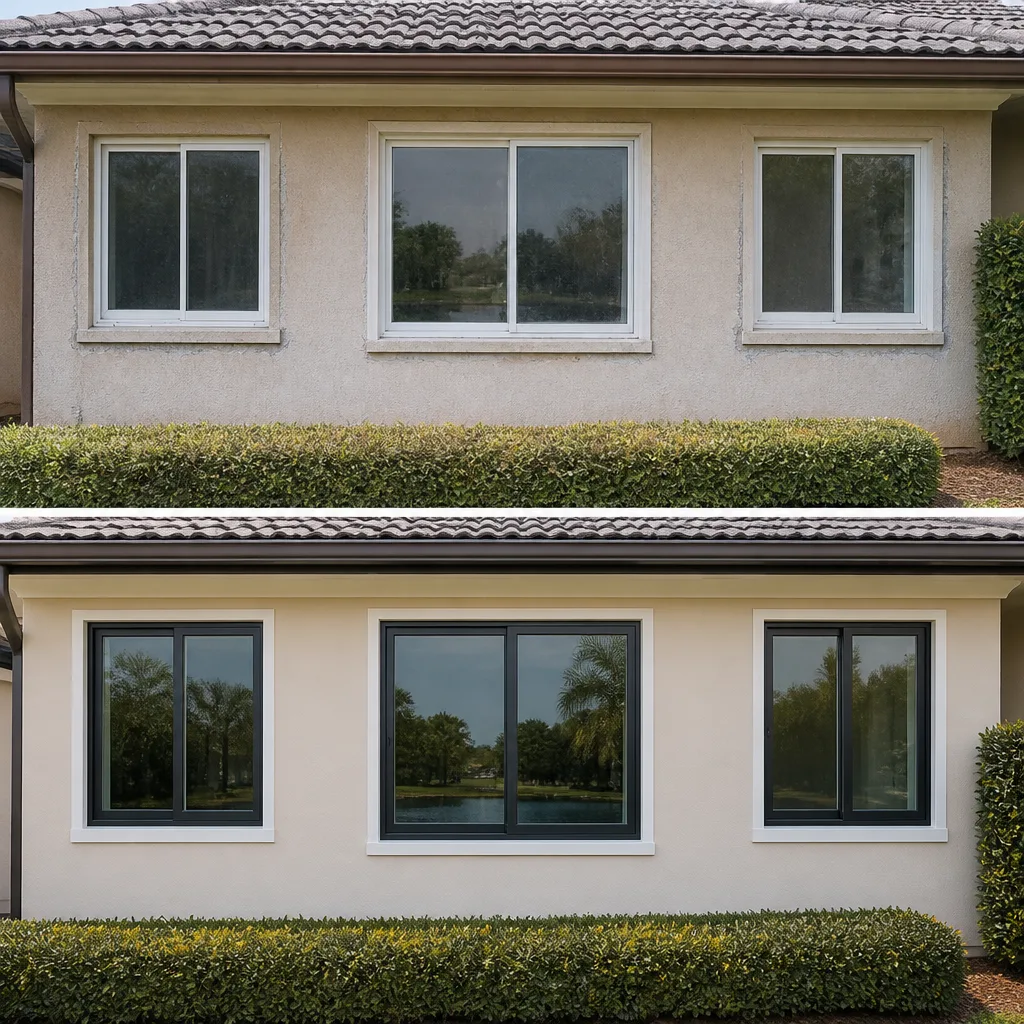
 Before
 After
AfterTable of Contents
- The Four-Decision Framework: Why Most Miramar Homeowners Get Stuck
- Broward County Building Code Amendments: What the State Brochure Doesn’t Say
- Product Selection: Matching the Opening to the Performance Tier
- Impact Rating Verification: Reading the NOA Like a Permit Inspector
- Installer Qualification: What “Licensed and Insured” Actually Means
- Post-Install Documentation: The Packet That Protects Your Sale
- The Measured Survey vs. the Sales Estimate: Understanding the Difference
- What Windows and Doors Cost in Miramar: Real Dollar Ranges
The Four-Decision Framework: Why Most Miramar Homeowners Get Stuck
Most homeowners in Miramar walk into a window purchase thinking they’ve made one decision: which window looks right and fits the budget. In our experience, this is where the trouble starts. A window or door purchase is actually four separate decisions, and each has its own set of questions, its own documentation, and its own risk if skipped.
Decision one: product selection. This is the frame style, the glass package, the hardware finish, the color. It’s what most sales presentations spend ninety percent of their time on. But product selection is meaningless if the product cannot pass the local wind-load requirement.
Decision two: impact rating verification. A product can be “impact-rated” under Florida state code and still fail Broward County’s amended thresholds. This is not a hypothetical. Broward’s High-Velocity Hurricane Zone designation adds wind-load requirements that exceed the statewide baseline, and not every product in a manufacturer’s catalog carries the NOA that covers Miramar’s specific zone.
Decision three: installer qualification. The license, the insurance, the permit-pulling authority, the inspection scheduling. An unlicensed installer can buy the right window and still leave you with an illegal installation that the city will flag when you sell.
Decision four: post-install documentation. The permit number, the inspection sign-off, the NOA reference, the photo record. Missing any of these means the job is legally incomplete, and incomplete jobs surface during title searches and home sales in Miramar’s active market.
We’ve seen homeowners in the Monarch Lakes and Sunset Lakes areas make excellent product choices, then discover at closing that their installation lacked a final inspection sign-off. The fix is expensive and time-consuming. Separating these four decisions prevents that outcome.
Broward County Building Code Amendments: What the State Brochure Doesn’t Say
Florida’s statewide building code sets a baseline for wind resistance, but Broward County operates under amendments that raise the threshold for specific zones. Miramar falls within the High-Velocity Hurricane Zone, which triggers stricter requirements for design pressure - the measured force a window or door must withstand without failure.
Here’s what this means in practice. A window rated for 30 pounds per square foot (psf) of design pressure might satisfy Florida’s statewide code for a given exposure category. That same window, installed in Miramar, might need to withstand 50 psf or higher depending on the height of the opening, the surrounding terrain, and the specific wind-borne debris region classification of the property.
The only document that proves compliance is the Notice of Acceptance (NOA) issued by the Florida Department of Business and Professional Regulation or Miami-Dade County. The NOA lists the exact design pressures the product has been tested to, the installation methods that maintain that rating, and the geographic zones where it applies. If a salesperson shows you a product cut sheet without the NOA number, you do not have proof of compliance.
Three specific questions to ask any contractor in Miramar:
- What is the NOA number for this exact product, and does it cover Broward County’s amended wind-load requirements?
- What design pressure was calculated for my specific opening, and how was that number derived?
- Will the permit application reference this NOA number, and will the inspector verify it on site?
At Sightline Windows & Doors Miramar, we specify products from lines including PGT and ECO Window Systems by the opening’s required design pressure, not by what is in stock. The measured survey we provide includes the calculated load for each opening, and the written quote references the matching NOA before any work is scheduled.
Product Selection: Matching the Opening to the Performance Tier
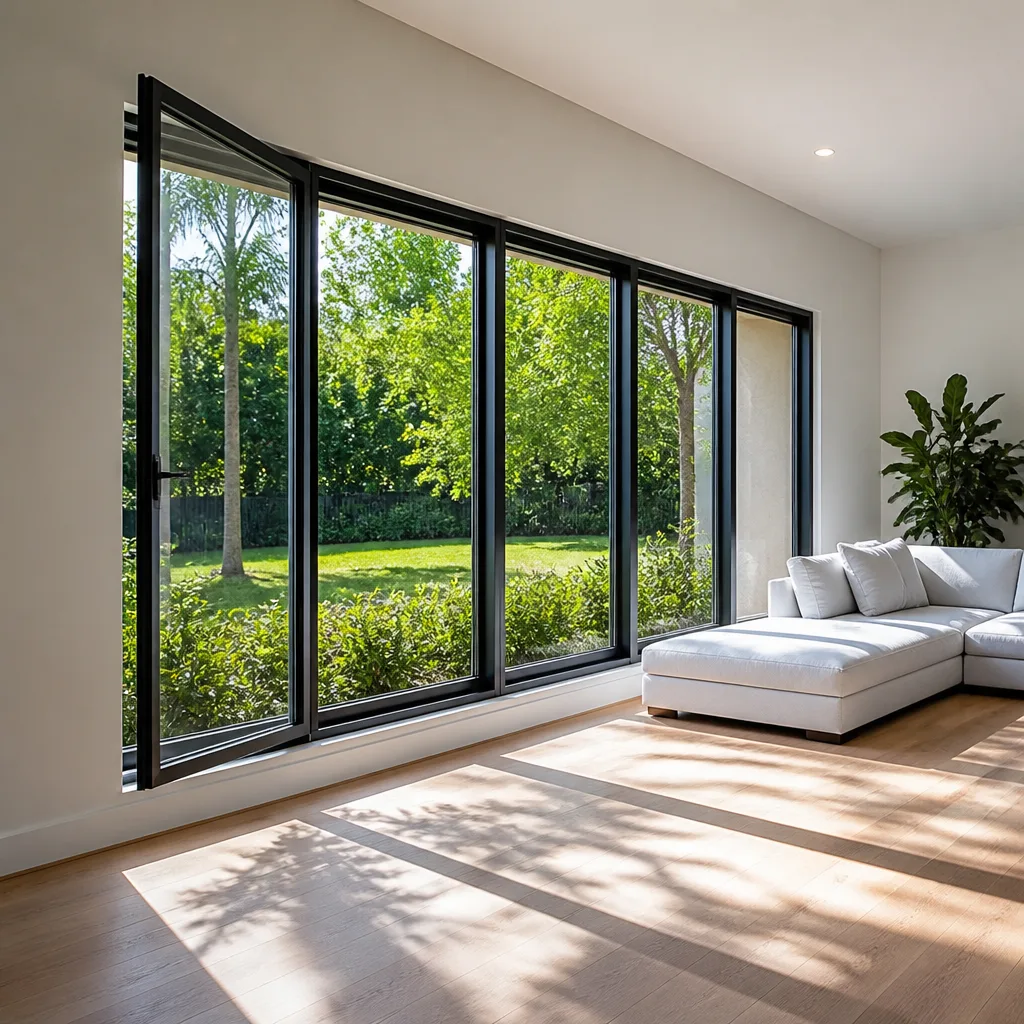
Product selection should follow code compliance, not precede it. Once you know the design pressure your opening requires, you can evaluate frames, glass packages, and operation types on their merits.
Miramar’s climate presents specific conditions that affect product performance. The combination of high humidity, salt air exposure, and intense solar gain means that material selection and glazing specification matter beyond the impact rating alone. Our Seasonal Windows & Doors Care for Miramar: Year-Round Homeowner’s Guide covers maintenance routines that extend product life in these conditions. We’ve replaced windows in the Riviera Isles and Nautica communities where the original vinyl frames had degraded from UV exposure, and in Harbor Islands where the coastal proximity accelerated hardware corrosion.
Frame materials and their trade-offs:
- Aluminum: Strong, narrow sightlines, excellent for large openings. Requires thermal break to prevent condensation in Miramar’s humidity. Higher U-factor without thermal improvement.
- Vinyl: Good thermal performance, lower maintenance. Frame profiles are wider, which reduces glass area. Color options are typically limited to lighter tints that resist heat absorption.
- Aluminum-clad wood: Interior wood finish with exterior aluminum protection. Excellent thermal performance and aesthetic flexibility. Requires more maintenance monitoring in high-humidity environments.
- Fiberglass composite: Expands and contracts at rates similar to glass, reducing seal stress. Excellent durability, premium price tier.
Glazing specification for Miramar:
The glazing package determines how the window performs after installation. Key metrics:
- U-factor: Measures heat transfer rate. Lower is better. Miramar homeowners should target 0.30 or below for energy compliance.
- SHGC (Solar Heat Gain Coefficient): Measures how much solar radiation passes through. Lower SHGC reduces cooling load. In Miramar’s climate, 0.25 or below is typical for west- and south-facing openings.
- Visible Transmittance (VT): How much light enters. Higher VT with lower SHGC is the ideal combination, achieved through spectrally selective coatings.
We specify products from eight manufacturer lines - PGT, CGI, CWS, ES Windows, ECO Window Systems, Mr-Glass, Therma-Tru, and ViewLux - by what the opening requires, not by what is in stock. A west-facing second-story opening in Miramar’s tropical climate needs a different glass package than a north-facing ground-floor unit, and the specification should reflect that.
Impact Rating Verification: Reading the NOA Like a Permit Inspector
The Notice of Acceptance is a legal document, not a marketing claim. Learning to read its key sections protects you from installing a product that cannot pass inspection in Miramar.
Where to find the NOA: Florida Product Approval website (floridabuilding.org) or Miami-Dade County’s product control database. Every legitimate impact-rated product has a searchable NOA number.
What to verify on the NOA:
- Product identification: The exact model number, frame depth, and glass thickness on your quote must match the NOA. A PGT WinGuard 5500 with 7/16-inch laminated glass is not the same product as a WinGuard 5500 with 9/16-inch glass under the same NOA.
- Design pressure rating: The NOA lists maximum design pressure for each approved size. If your opening requires 55 psf and the NOA maxes at 50 psf, the product is non-compliant for your application.
- Installation method: The NOA specifies fasteners, spacing, sealant type, and flashing integration. Deviating from these methods voids the rating.
- Geographic applicability: Some NOAs exclude High-Velocity Hurricane Zone applications or limit them to specific exposure categories. Verify Miramar’s classification is covered.
- Expiration date: NOAs expire. An active product with an expired NOA cannot be permitted.
We include the NOA number on every written quote at Sightline. The customer keeps a copy, and the permit application references it directly. This is Haven Clause 1: Have it in writing. If a contractor cannot produce the NOA number before you sign, the product’s compliance is unverified.
We’ve reviewed competitor quotes in Miramar where the product model was listed but the NOA was not referenced. In several cases, the quoted product was either expired, size-limited below the opening requirement, or excluded from HVHZ application. The Free Second Opinion we offer exists for this reason: bring any written estimate, and we will verify the NOA against your specific openings at no charge.
Installer Qualification: What “Licensed and Insured” Actually Means
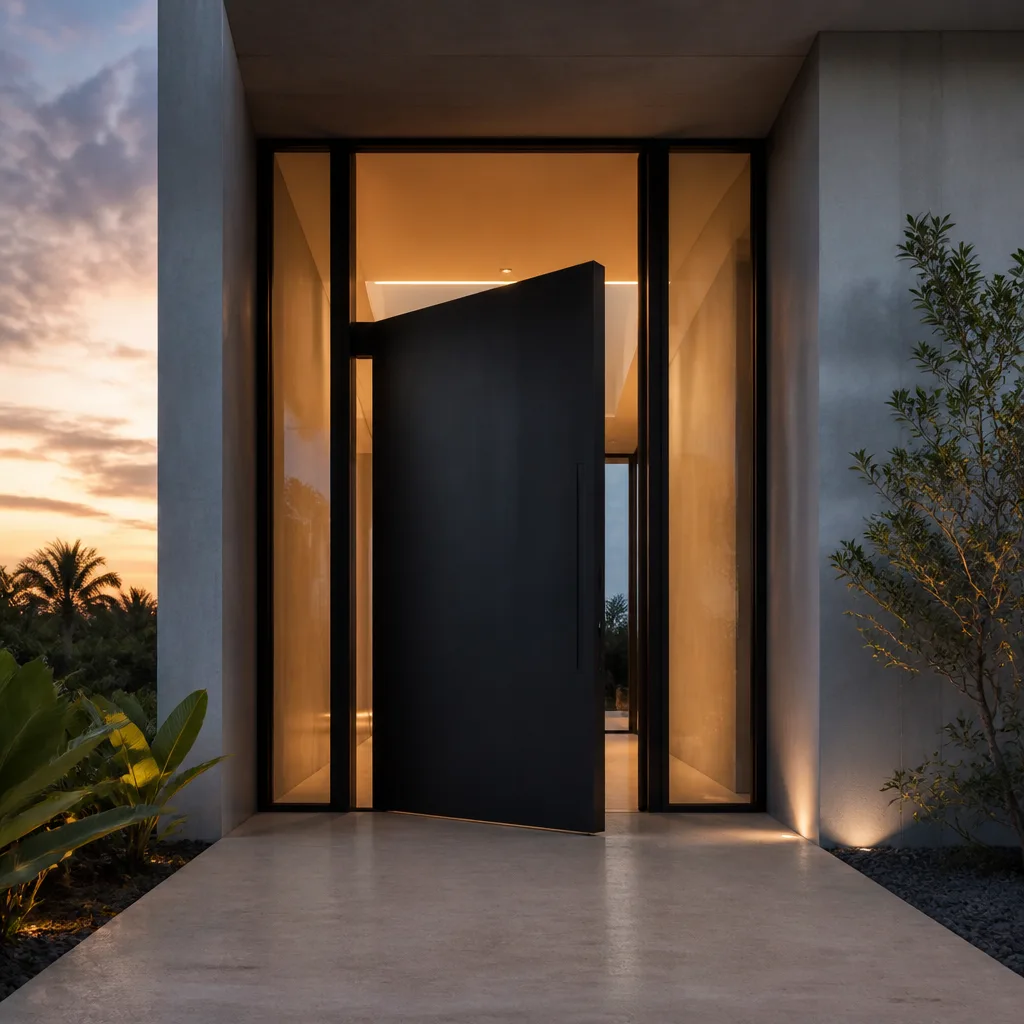
Florida allows several license types to perform window and door installation, but not all licenses carry permit-pulling authority for every jurisdiction. If you’re unsure how to evaluate credentials, our How to Hire a Windows & Doors Contractor in Miramar: A Step-by-Step Guide breaks down what to verify. In Miramar, which operates under Broward County’s building department, the contractor must hold a license recognized by that department and maintain active general liability and workers’ compensation coverage.
License verification steps:
- Request the license number and verify it at myfloridalicense.com. Confirm the status is “Current/Active” and the license type matches the work scope.
- Verify the license holder is the entity signing your contract. Subcontracting is common, but the permit must be pulled by a licensed contractor, and liability chains get complicated when multiple entities are involved.
- Confirm general liability insurance is active and lists coverage amounts. Request a certificate of insurance if not provided.
- Verify workers’ compensation coverage. Florida requires it for construction businesses with employees. An installer without workers’ comp exposes you to liability if a worker is injured on your property.
Haven Clause 3 - Verified Crews - means our technicians are background-checked, uniformed, and identified by license number before arrival. The person at your door is the person on the record. We do not send unbadged subcontractors to Miramar homes.
Permit pulling is not optional in Miramar. Any window or door replacement that alters the opening requires a permit, and the inspection must be scheduled and passed. A contractor who suggests “we can skip the permit for this one” is proposing an illegal installation that will surface in any future title search, insurance claim, or resale.
We pull permits on every job, schedule inspections, and include the permit number in the documentation packet. The inspection sign-off is the legal confirmation that the installation meets code. Without it, the job is incomplete.
Post-Install Documentation: The Packet That Protects Your Sale
The documentation you receive after installation is as important as the product itself. In Miramar’s active real estate market, incomplete documentation delays closings, reduces sale prices, and can trigger re-inspection requirements.
The complete installation packet contains:
- Permit number and inspection sign-off: Proof the work was reviewed and approved by the authority having jurisdiction. In Miramar, this is typically Broward County Building Code Services or the City of Miramar Building Department, depending on the property’s location.
- NOA number and product specification sheet: Links the installed product to its approved performance rating.
- Manufacturer’s warranty document: Registered to the property address and homeowner name.
- Installation warranty or workmanship guarantee: Our 365-Day Done Right Promise, written into the Haven Standard, covers any installation-related issue for one year from completion.
- Photo record of the completed work: Haven Clause 4 - Evidence on every job - means dated, geotagged photographs of the installation, including framing, fastening, sealing, and finish details.
- Final invoice matching the written quote: Haven Clause 5 - No surprises - means the measured survey and the final invoice are the same document.
We have been called to Miramar homes where a previous installer’s documentation was missing one or more of these elements. The most common gap is the inspection sign-off: the permit was pulled, the work was done, but the final inspection was never scheduled or failed and was not corrected. The homeowner discovers this when the buyer’s title search flags an open permit.
Fixing an open permit requires re-exposing the installation for inspector access, which in some cases means removing interior trim or exterior cladding. The cost falls to the homeowner. This is why we verify inspection completion before final payment and include the sign-off in the packet.
The Measured Survey vs. the Sales Estimate: Understanding the Difference
This distinction is central to how Sightline operates, and it is the most common source of change-order disputes we see in Miramar.
A sales estimate is generated from rough dimensions, often provided by the homeowner over the phone or estimated from street-view imagery. It assumes standard conditions: square openings, level frames, no structural repair, no rot, no stucco integration issues. The price is attractive because it excludes the conditions that actually exist.
A measured survey is performed on site with calibrated tools. It records:
- Exact opening width, height, and depth at three points each (top, middle, bottom for width; left, center, right for height)
- Frame squareness and plumb deviation
- Substrate condition: wood rot, moisture intrusion, termite damage, structural settling
- Flashing and water management integration with existing cladding
- Interior finish protection requirements
The measured survey document becomes the basis for the written quote. At Sightline, the customer keeps the survey, and the quote cannot deviate from it. This is Haven Clause 1 in operation: the measurement and the price are the same document.
Change orders arise when the actual conditions differ from the assumptions in a sales estimate. We’ve opened walls in Miramar’s older neighborhoods - areas near the original development around Miramar Parkway - and found rotted framing from decades of unflashed windows, improper stucco transitions, and previous DIY repairs that concealed damage. A sales estimate cannot account for these conditions. A measured survey does.
If a contractor offers a quote without visiting your property, the price is provisional. The final invoice will almost certainly differ. We do not provide phone quotes for this reason. The measured survey is free, it is documented, and it protects both parties.
What Windows and Doors Cost in Miramar: Real Dollar Ranges
These ranges reflect our actual installations in Miramar since 2012, adjusted for current material and labor costs. They assume compliant products, permitted installation, and complete documentation. Lower prices exist in the market; they typically reflect unpermitted work, provisional quotes, or products without HVHZ-compliant NOAs.
| Opening Type | Typical Size Range | Installed Price Range | Key Cost Drivers |
|---|---|---|---|
| Single-hung impact window | 24″ x 36″ to 36″ x 72″ | $650 - $1,400 | Frame material, glass package, structural prep, floor level |
| Horizontal rolling impact window | 48″ x 36″ to 72″ x 60″ | $850 - $1,800 | Screen configuration, lock hardware, opening width |
| Impact casement window | 24″ x 36″ to 36″ x 60″ | $1,100 - $2,200 | Crank hardware grade, multi-point locking, egress requirements |
| Standard sliding glass door (impact-rated) | 72″ x 80″ to 96″ x 80″ | $3,200 - $5,800 | Panel count, track system, sill condition, impact rating tier |
| French door system (impact-rated) | 60″ x 80″ to 72″ x 80″ | $4,500 - $7,500 | Swing configuration, multi-point hardware, sidelite integration |
| Entry door (impact-rated, pre-hung) | 36″ x 80″ standard | $2,800 - $5,200 | Slab material, sidelites, transom, frame condition, lock system |
| Custom geometric impact window | Variable | $1,800 - $4,500+ | Shape complexity, reinforcement engineering, custom flashing |
These ranges include product, installation, permit, and inspection. They do not include structural repair, stucco remediation, or interior finish restoration, which are scoped separately based on the measured survey.
We specify products from PGT, ECO Window Systems, and Therma-Tru across these ranges, matched to the opening’s requirements. A ground-floor west-facing opening in Miramar’s climate zone gets a different specification than a second-floor north-facing unit, and the price reflects that specificity.
Every quote we provide is written, itemized, and fixed. The price on the document is the price on the invoice. Call (754) 260-1468 to schedule your free measured survey.
Common Mistakes to Avoid
- Accepting a phone quote as final. Without field measurement, the price is provisional. We’ve seen Miramar homeowners receive phone quotes that underestimated actual cost by 40% once conditions were visible.
- Assuming “impact-rated” means Broward-compliant. The NOA must explicitly cover High-Velocity Hurricane Zone application. Generic impact ratings from out-of-state manufacturers often fail this test.
- Skipping permit verification. An unpermitted installation is a latent defect that surfaces at sale. Verify the permit number with the issuing authority before final payment.
- Neglecting the photo record. Photos are your evidence if seal failure, water intrusion, or installation defect appears later. Demand dated, detailed photography as standard, not as an upsell.
- Choosing product before performance tier. Falling in love with a frame style before verifying its design pressure rating for your specific opening leads to expensive specification changes or non-compliant installation.
- Ignoring the installation warranty terms. Manufacturer warranties cover product defects. Installation warranties cover workmanship. You need both, and they should be in writing with clear claim procedures.
- Failing to verify license status independently. A contractor who shows you a license card may be displaying an expired, suspended, or non-matching license. Verify at myfloridalicense.com.
When to Call a Professional
Call a licensed window and door contractor when you see visible frame deterioration, experience persistent condensation between glass panes, notice air infiltration around closed units, or are preparing to sell and need documentation verification. In Miramar’s climate, salt air and humidity accelerate wear on hardware and seals; early professional assessment prevents costlier replacement.
If you’ve received a written estimate from another contractor and want verification of the NOA, design pressure calculations, or permit scope, Sightline Windows & Doors Miramar offers a Free Second Opinion - we will review any competitor’s written quote at no charge and identify compliance gaps or scope omissions.
For new installation or replacement, we begin with a measured survey you keep, followed by a written quote that cannot change without documented cause. Window replacement in Miramar and door installation in Miramar both require the same four-decision discipline: product, impact rating, installer qualification, and documentation.
Sightline Windows & Doors Miramar offers free estimates in Miramar - call (754) 260-1468 to schedule your measured survey. For more guides & resources, visit our blog.
Frequently Asked Questions
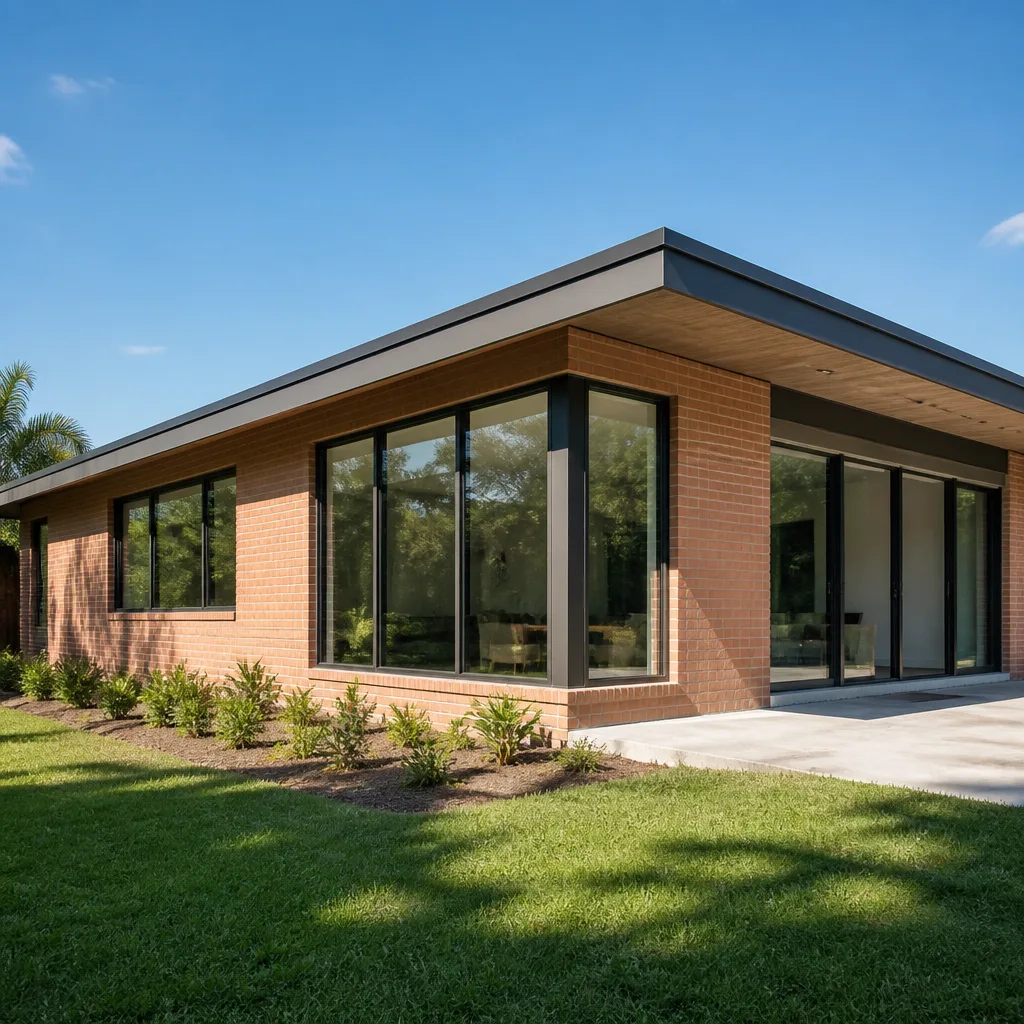
A standard single-hung impact window in Miramar typically ranges from $650 to $1,400 installed, while a sliding glass door runs $3,200 to $5,800 depending on size, frame material, and structural preparation needs. These ranges assume permitted installation with complete documentation. Call (754) 260-1468 for an exact quote based on your specific openings - estimates are free.
Yes. Any window or door replacement that alters the opening requires a permit in Miramar, which operates under Broward County’s building code. The permit must reference the product’s NOA number, and the installation must pass inspection. An unpermitted installation is legally incomplete and will surface during any future property sale or insurance claim.
“Hurricane-proof” is not a defined term in the building code. Impact-rated means the product has passed missile-impact and cyclic pressure testing under a specific NOA, with verified design pressures for specific geographic zones. A product can be marketed as “hurricane-resistant” without carrying the NOA required for Miramar’s High-Velocity Hurricane Zone. Always verify the NOA number against your specific address.
Ask for the NOA number and verify it independently at floridabuilding.org or the Miami-Dade product control database. Confirm the product model matches exactly, the design pressure meets or exceeds your opening’s requirement, and the geographic applicability includes Broward County’s HVHZ designation. We include this verification in every Free Second Opinion we provide.
At Sightline, the price on the written quote is the price on the final invoice. This is Haven Clause 1: the measured survey and the quote are the same document. The only circumstance where price changes is if concealed conditions are found during installation - rot, structural damage, or previous unpermitted modifications - and even then, the change is documented with photos and requires written approval before proceeding.
Most residential window replacements in Miramar require one to three days of on-site work, depending on opening count, structural preparation needs, and inspection scheduling. Permits typically process within five to ten business days, and inspections are scheduled after installation completion. We coordinate permit pulling and inspection scheduling as part of our standard scope.
You should receive the permit number, inspection sign-off, product NOA reference, manufacturer’s warranty, installation warranty, photo record of completed work, and final invoice matching the written quote. Missing any of these elements means the job is legally or contractually incomplete. We provide all seven items in a single packet at job completion.
The Bottom Line
Windows and doors in Miramar are not a single purchase. They are four separate decisions - product, impact rating, installer, and documentation - and each carries its own risk if skipped or combined. Broward County’s High-Velocity Hurricane Zone amendments create requirements stricter than Florida’s statewide code, and compliance is proven only through the NOA, permit, and inspection sign-off. A measured survey prevents change orders. A written quote prevents price surprises. A complete documentation packet protects your property value. We have applied these principles to over 18,000 installations since 2012, and we apply them the same way to every measured survey we perform in Miramar.
Written by Sonia Raman, Owner at Sightline Windows & Doors Miramar, serving Miramar since 2012.
Six Reasons Homeowners Choose Sightline Windows & Doors Miramar
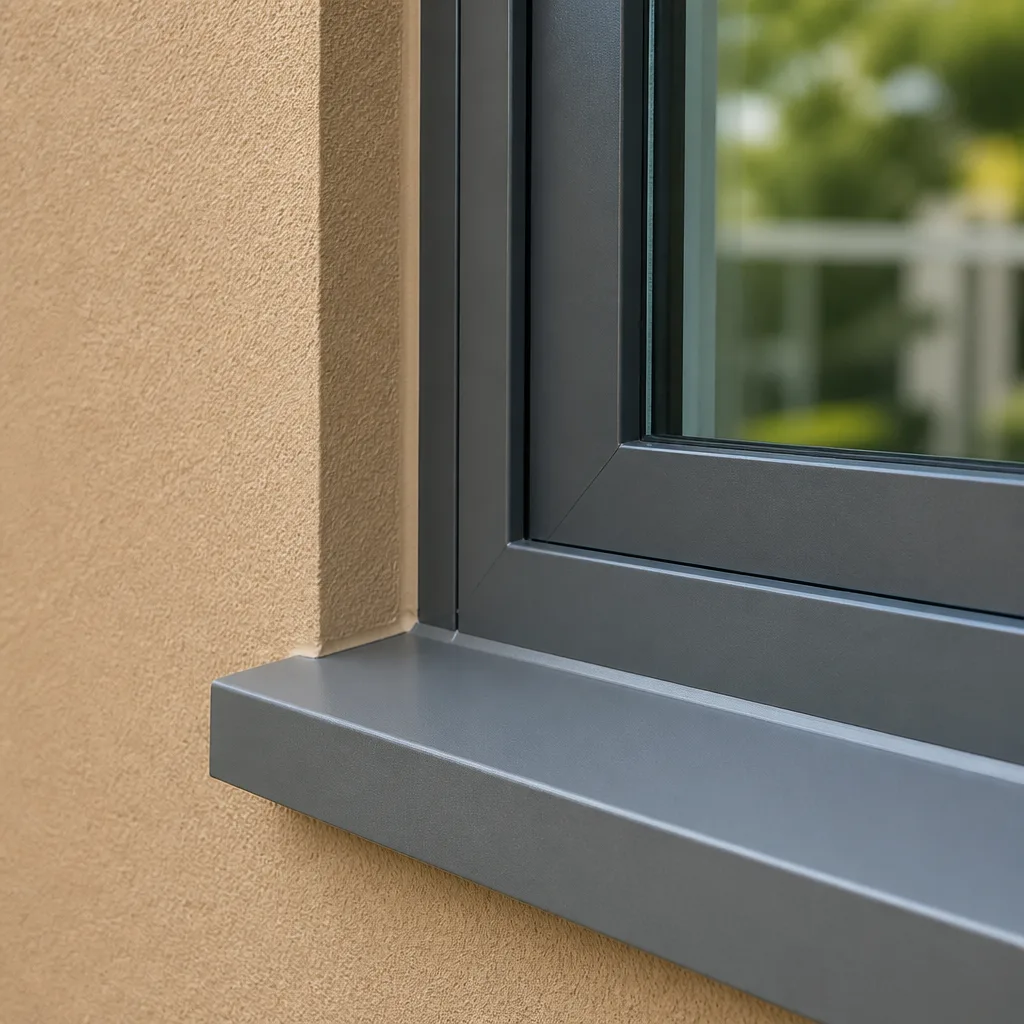
Impact systems engineered to design pressures up to +/-100, matched to your wind zone - your openings hold when the storm arrives.
Low-E insulated impact glass from our manufacturer lines commonly cuts monthly cooling bills 20-30%.
Laminated impact glass shuts out up to 40% of outside noise - traffic, neighbors, weather.
Monitoring services run $30-90 a month. Laminated impact glass resists forced entry around the clock, with no subscription.
Florida homeowners average around 25% savings on the windstorm portion of their policy after protecting every opening - some homes qualify for more.
A full impact package upgrades curb appeal, buyer confidence and appraised value in one project.
Other Sightline Windows & Doors Miramar Services
What Neighbors Say About Sightline Windows & Doors Miramar