Last updated September 24, 2026
New windows and doors improve comfort, cut energy bills and add long-term value to your home. Sightline Windows & Doors Miramar pairs proven product lines with our own installing crews for lasting performance - and a price we put in writing.
1. Choose your installer
The unit is half the job - the install is the other half. Our own background-checked crews measure, set, seal and insulate every opening, and they know the lines we quote inside and out because they install them every week.
2. Select the right products
Compare styles, materials and glass packages side by side until the fit is right for your rooms, your budget and your goals. The product-line comparison below is the place to start.
3. Prepare your home for install
Before install day we walk you through a short checklist - furniture pulled back, treatments down, a clear path to each opening - so install day is watch-it-happen, not scramble.
Compare the Lines We Quote
Every project is priced on the same lines, side by side - the price indicators below are relative, and your consultant shows exact numbers on your actual openings.
PGTThe line Florida homeowners arrive naming - the most Miami-Dade certifications in the industry$$$
- More Miami-Dade NOA certifications than any other line we quote
- WinGuard, EnergyVue and ClassicVue Max systems built for every wind zone
- 99% on-time delivery keeps your install date on the calendar
CGIThe heavyweight impact line$$$$$
- Large-missile impact ratings for the strictest wind zones
- Architectural-grade aluminum with commercial-depth frames
- The line we quote when protection is the whole point
CWSThe Florida value pick$$
- Vinyl systems built in Florida for Florida codes
- Strong energy packages at the friendliest price point
- The smart start for whole-home replacements on a budget
ESWSlim lines, big glass$$$$
- Narrow-sightline aluminum for modern elevations
- Oversized openings and floor-to-ceiling glass
- Impact-rated without the bunker look
ECOThe aluminum impact workhorse$$$
- Miami-built aluminum impact systems
- A strong price-to-protection ratio for coastal homes
- Proven inventory lines with short lead times
Window Installation Maintenance Checklist for Miramar Homeowners
Salt-air oxidation on aluminum window frames within one mile of the Miramar coast can advance enough in 90 days to void a manufacturer’s finish warranty. Yet most maintenance guides still recommend annual inspections written for inland humidity, not coastal corrosion cycles. In Miramar, where the Atlantic trade wind carries chloride ions across neighborhoods from Silver Lakes to Sunset Lakes year-round, window maintenance operates on a compressed timeline that generic Florida advice misses entirely. This guide gives Miramar homeowners a maintenance calendar tied to actual coastal degradation rates, with specific inspection protocols, cleaning chemistry, and documentation standards that protect your investment.
Quick Answer

Miramar homeowners should inspect windows every 90 days for salt-air corrosion on frames and hardware, clean impact laminate glass with pH-neutral solution only, test weep holes monthly during storm season, and lubricate multi-point locking systems every six months with silicone-based lubricant. Keep a photo record comparing current frame condition to your installation baseline to catch warranty-voiding oxidation before it spreads.
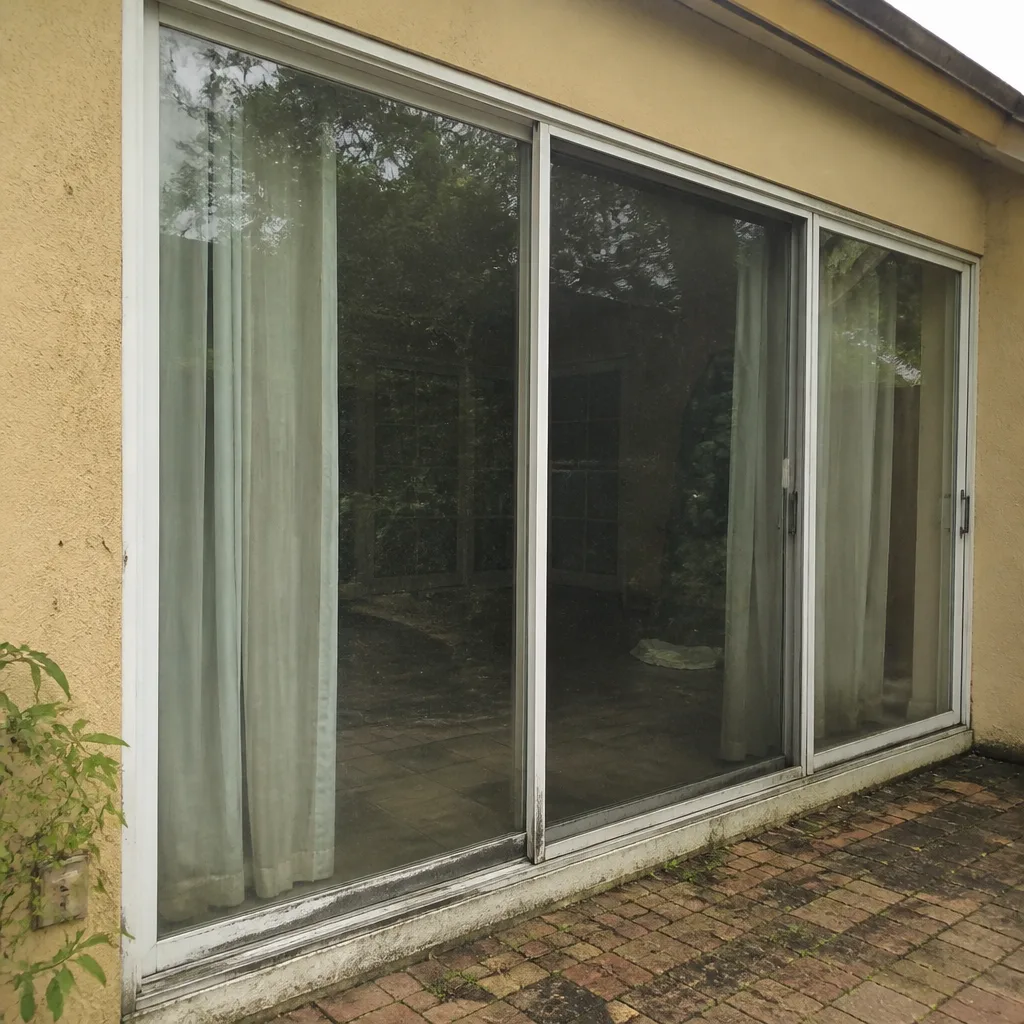 Before
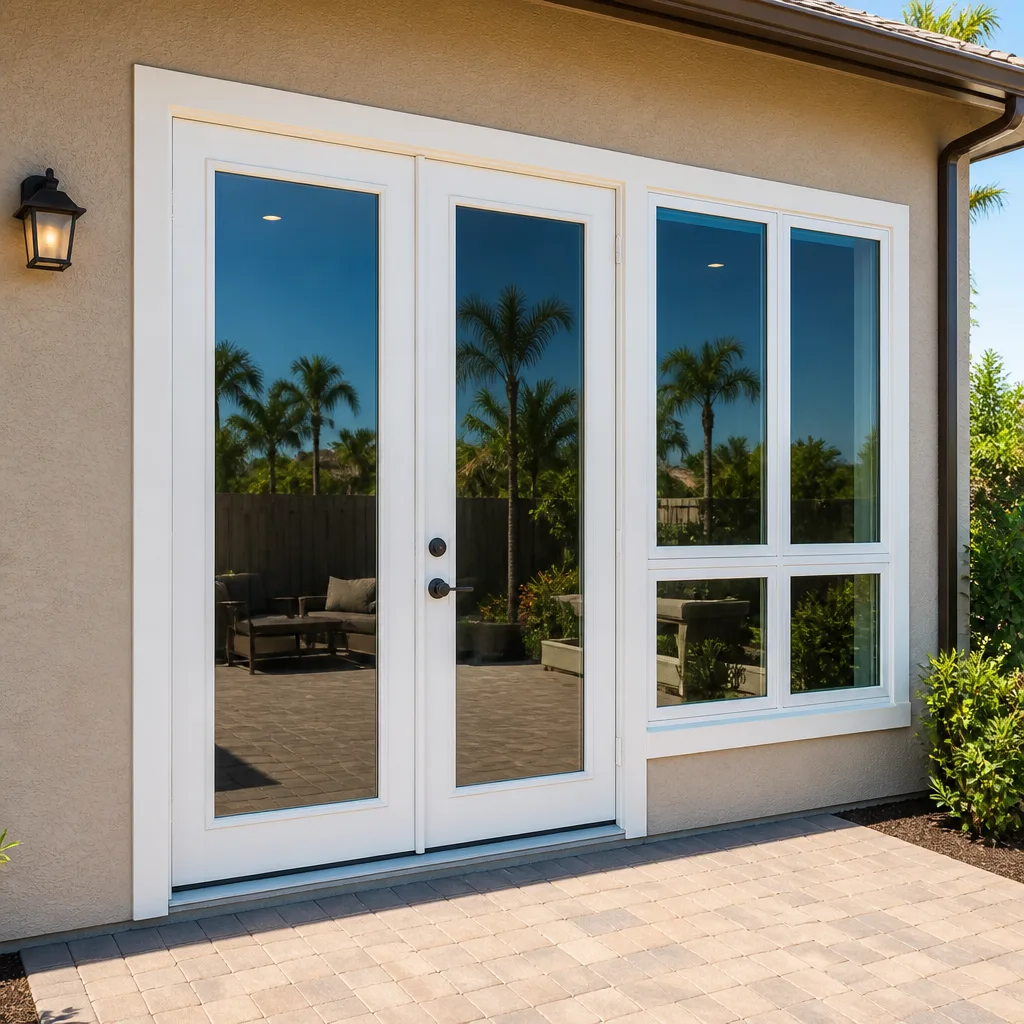 After
AfterTable of Contents
- The 90-Day Salt-Air Inspection Protocol
- How to Test Weep Holes and Drainage Channels
- Cleaning Chemistry for Impact Laminate vs. Low-E Glass
- Hardware Lubrication for Impact-Rated Multi-Point Locks
- What Your Post-Installation Photo Record Should Contain
- Annual Deep Maintenance Schedule
- Common Mistakes to Avoid
- When to Call a Professional
- Frequently Asked Questions
The 90-Day Salt-Air Inspection Protocol
Miramar sits approximately 8 miles inland from the Atlantic, but the coastal salt front extends well past I-95 during onshore flow events. In our experience across Broward County, homes west of the Florida Turnpike in Miramar still show measurable chloride accumulation on exterior aluminum surfaces within a single quarter. The manufacturers we work with, including PGT and ECO Window Systems, specify that finish warranty coverage requires “no evidence of corrosive degradation” at the time of claim. A 90-day inspection cycle catches oxidation before it becomes warranty-voiding damage.
Here’s what to inspect at each 90-day interval, with specific attention to Miramar’s exposure patterns:
Frame and Sill Inspection (Quarterly)
- White powder or pitting on aluminum frames: Look first at the bottom rail of the sash and the sill track, where salt-laden moisture pools after rain. In Miramar’s summer convection storms, water can sit in these channels for hours. Early oxidation shows as a chalky white residue. Pitting indicates active corrosion and requires immediate attention.
- Discoloration at fasteners and corners: Dissimilar metal contact points, stainless steel screws in aluminum frames, accelerate galvanic corrosion in salt air. Check corners of the frame where condensation collects.
- Sealant bead integrity: The perimeter sealant between frame and wall expands and contracts with Miramar’s temperature swings, 50°F winter lows to 95°F summer highs. Look for separation, cracking, or shrinkage that exposes the rough opening to water.
- Screen frame condition: Often overlooked, aluminum screen frames oxidize faster than main window frames due to thinner material and less protective coating. Corroded screen frames deposit oxide onto the glass below.
Hardware Inspection (Quarterly)
- Operate each lock, hinge, and operator through full range. Resistance or grit indicates salt intrusion into the mechanism.
- Check for corrosion on exposed metal surfaces of handles, keepers, and hinges. Bronze and brass hardware develops green verdigris; zinc-plated steel shows red rust.
- Inspect weatherstrip compression. In Miramar’s UV exposure, rubber and neoprene weatherstrip hardens and loses elasticity in 3-5 years, faster than inland Florida.
Document findings with dated photos. Compare against your installation baseline, covered in the photo record section below. If you find white oxidation, clean with a solution of one tablespoon baking soda per quart of distilled water, applied with a soft cloth. Rinse thoroughly. Never use abrasive pads or steel wool on anodized or painted aluminum, the finish damage is immediate and irreversible.
For homeowners in Miramar’s eastern sections near Pembroke Pines border, where salt exposure is moderate but consistent, this 90-day cycle is the minimum. After named storms or extended onshore wind events, add an interim inspection.
How to Test Weep Holes and Drainage Channels
Blocked weep holes are the single most common cause of water intrusion that gets misdiagnosed as sealant failure in Miramar. Water enters the window system through normal weather exposure, collects in the sill track, and must exit through small drainage openings at the exterior. When these clog with debris, salt residue, or insect nests, water backs up into the wall cavity or spills over the interior sill.
We’ve documented this on hundreds of service calls across Miramar. The homeowner reports “the window is leaking,” the caulk gets replaced unnecessarily, and the actual problem, a weep hole blocked with a mud dauber nest or crystallized salt, persists.
The No-Tool Weep Test
- Locate the weep holes: On most modern windows, including PGT and CGI lines we install, weep holes are small rectangular or circular openings in the exterior face of the sill, typically 2-4 per window width. Some systems have baffle-style weeps with internal channels.
- Pour test: Slowly pour one cup of water into the sill track from the interior side. The water should sheet across the track and exit the weep holes within 30 seconds. If it pools or drains slowly, obstruction exists.
- Visual confirmation: From outside, you should see water exiting the weeps. If the exterior weep opening is visible but dry during the test, the internal channel is blocked.
- Clearing: Use a piece of flexible wire, a pipe cleaner, or the plastic tie from a bread bag, never a metal wire coat hanger that can damage the weep baffle. Work gently in the direction of drainage. Flush with clean water until flow is free.
In Miramar, salt spray accelerates weep blockage two ways. First, evaporating salt water leaves crystalline deposits that narrow the opening. Second, the salt residue attracts and traps windblown debris. During hurricane season, when Miramar experiences heavy rain followed by dry periods, this cycle repeats monthly.
Test weep holes monthly from June through November. In dry season, quarterly testing suffices. After any storm with sustained winds above 35 mph, check weeps within 48 hours, wind-driven debris loads them quickly.
Cleaning Chemistry for Impact Laminate Glass vs. Low-E Glass
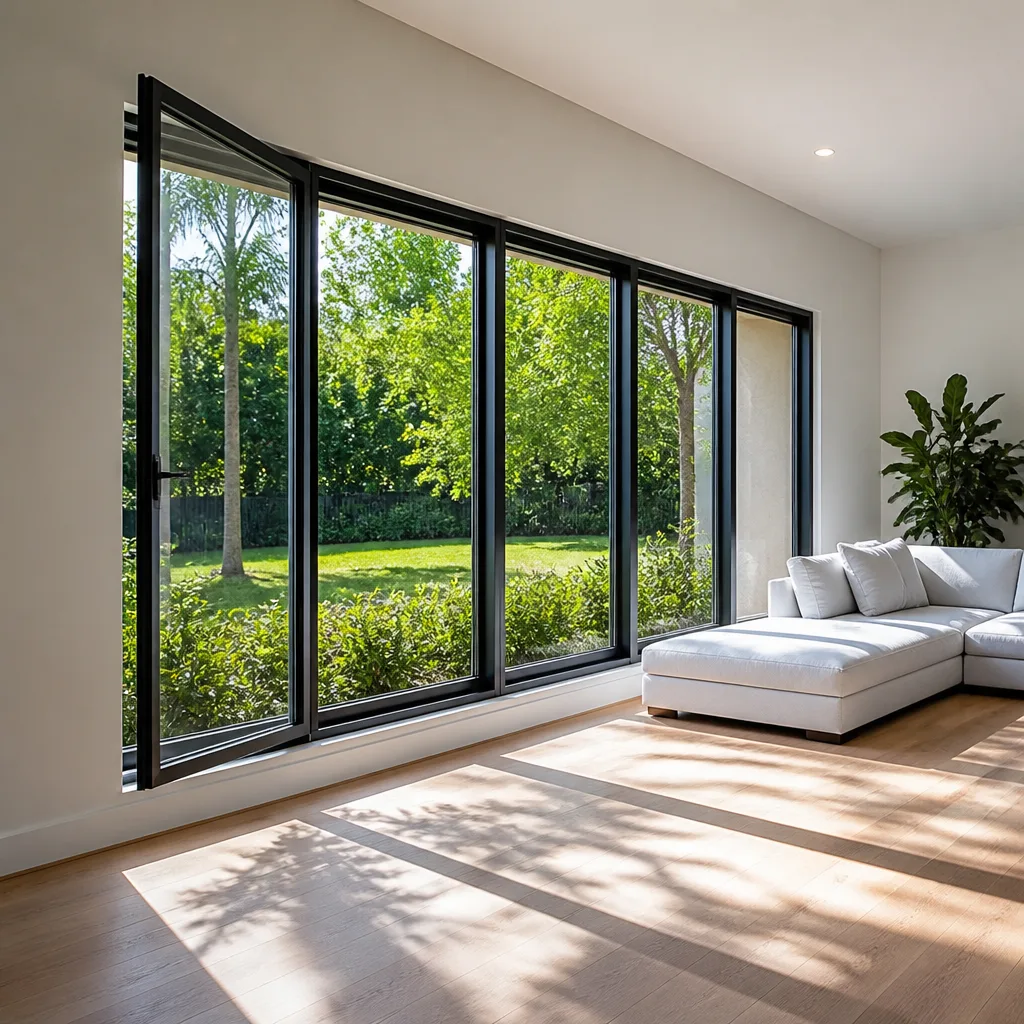
Not all window glass accepts the same cleaner. Using ammonia-based or acidic products on impact laminate glass degrades the interlayer. Using abrasive or alkaline cleaners on Low-E coated glass damages the microscopic metallic coating and voids energy performance warranties. In Miramar, where impact-rated products are code-required in most zones, this distinction matters on nearly every home.
Impact Laminate Glass (PGT, Mr-Glass, ECO Window Systems Impact Lines)
Impact laminate consists of two glass lites bonded with a polyvinyl butyral (PVB) or ionoplast interlayer. This interlayer is what holds the glass intact during wind-borne debris impact. The interlayer edges are exposed at the glass perimeter, and harsh chemicals migrate along the edge seal over time.
Approved: pH-neutral glass cleaner (pH 6.5-7.5), distilled water with mild dish soap, white vinegar solution (1:10 with water) for occasional mineral deposit removal.
Prohibited: Ammonia-based cleaners (Windex original formula, most blue glass cleaners), acetone, alcohol-based solutions, abrasive powders or pads, pressure washers directed at glass edges.
The ammonia prohibition surprises many homeowners. Ammonia outgasses from the cleaner, migrates to the laminate edge, and causes interlayer delamination visible as edge fogging or bubbles. We’ve replaced impact units in Miramar where this damage appeared within 18 months of improper cleaning.
Low-E Coated Glass (Standard and Energy-Efficient Lines)
Low-E coatings are thin metallic layers, typically silver-based, applied to one glass surface inside the insulating air space or on surface #2 or #3. The coating reduces solar heat gain coefficient (SHGC) and improves U-factor. On single-pane or surface-applied coatings, the metallic layer is vulnerable.
Approved: pH-neutral or mildly alkaline cleaners (pH 7-9), distilled water, soft microfiber cloths, squeegees with rubber blades.
Prohibited: Acidic cleaners (vinegar on coated surfaces, citrus-based products), abrasive cleaners, razor blades or scrapers, high-alkaline degreasers.
The vinegar distinction matters. Vinegar is acceptable for occasional mineral deposit removal on uncoated impact laminate, but not for routine cleaning of Low-E coated surfaces. For Miramar homes with mixed product types, perhaps impact front windows and standard Low-E rear windows, maintain separate cleaning supplies or choose pH-neutral products for all.
Cleaning Protocol
- Rinse glass with clean water to remove loose salt and grit. Salt crystals are abrasive; wiping dry glass scratches coatings.
- Apply cleaner with a soft, lint-free cloth or sponge. Work top to bottom.
- Squeegee or dry with clean microfiber. Avoid paper towels, they contain wood fibers that micro-scratch.
- Clean frames first, then glass, to prevent frame cleaner runoff onto glass.
Frequency in Miramar: exterior glass monthly minimum, bi-weekly within one mile of heavy salt exposure. Interior glass quarterly. Frame cleaning concurrent with exterior glass.
Hardware Lubrication for Impact-Rated Multi-Point Locks
Impact-rated windows and doors in Miramar use multi-point locking systems, three to five locking points along the sash edge that engage simultaneously when the handle is turned. These systems provide the structural integrity required for hurricane resistance. They also contain more moving parts than single-point locks, and those parts operate under higher load.
Salt air attacks these mechanisms from two directions: direct corrosion of metal components, and degradation of the neoprene or EPDM seals that keep water and grit out of the lock body. Lubrication schedule and product selection determine whether a multi-point system operates smoothly for 15 years or fails in 5.
Lubrication Schedule
- Every 6 months: Hinge pins, handle spindles, and exposed lock faceplates.
- Annually: Internal lock mechanisms, accessed by removing the lock faceplate or through lubrication ports if equipped.
- After any submersion event: Immediate disassembly and service by a qualified technician. Flood water carries abrasive silt into lock bodies.
Product Selection
Approved for Miramar coastal use:
- Dry silicone spray (aerosol with straw applicator for precision)
- White lithium grease (for heavy-load hinge points, applied sparingly)
- Teflon-based dry lubricant (for lock cylinders, does not attract dust)
Prohibited:
- WD-40 as a lubricant (acceptable for cleaning only, it evaporates and leaves residue that attracts salt)
- Petroleum-based greases (attack neoprene and EPDM seals, causing swelling and failure)
- Graphite powder (corrosive to aluminum in salt-air presence)
The petroleum prohibition is critical. Many homeowners have a tube of general-purpose grease in the garage. Applied to a multi-point lock with neoprene seals, it causes seal swelling within months. The swollen seal then binds the mechanism, and the homeowner applies more grease, accelerating damage.
Application Method for Multi-Point Locks
- Clean the lock face and visible mechanism with a dry cloth to remove salt residue and old lubricant.
- Apply dry silicone sparingly to the cam, deadbolt, and handle spindle interface. One-second spray per point.
- Operate the handle through full cycle 10 times to distribute lubricant.
- Wipe excess from faceplate. Excess lubricant attracts airborne salt and debris.
For window installation in Miramar with PGT or Therma-Tru multi-point systems, the manufacturer specifies silicone-only lubrication. Using other products voids the hardware warranty. We document the specified lubricant on every installation record we provide.
What Your Post-Installation Photo Record Should Contain
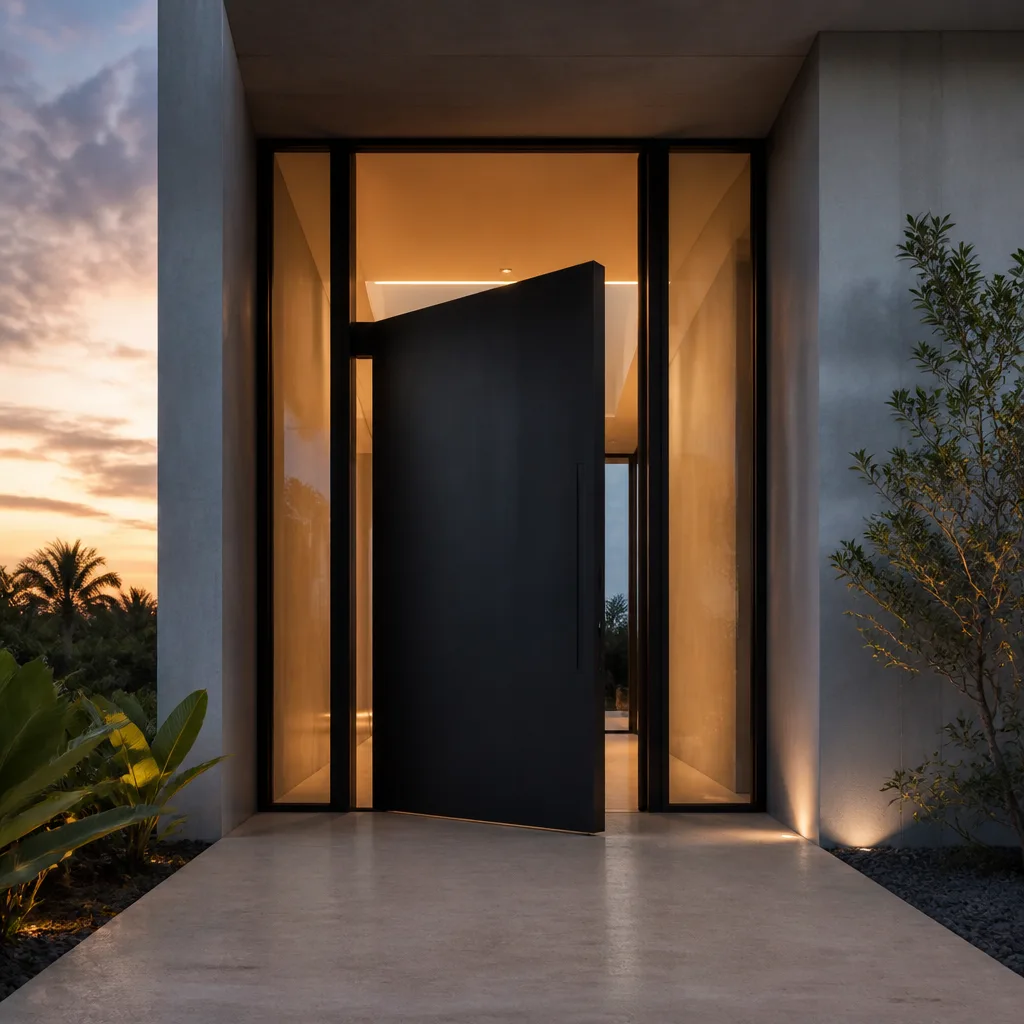
Every Sightline Windows & Doors Miramar home installation leaves a documented photo record under Haven Clause 4, Evidence on Every Job. This record serves as the baseline for future maintenance comparisons. If you did not receive such documentation from your original installer, create your own within 30 days of reading this guide, before further degradation occurs.
Required Baseline Documentation
- Wide shots of each installed unit: Capture full frame, surrounding wall, and ground plane. These reveal installation squareness, shim placement, and sealant application quality that may not be visible in close-up.
- Close-ups of all four frame corners: Corner joints are the first failure point for water intrusion and the first location for salt-air oxidation to appear.
- Hardware detail: Each lock, handle, hinge, and operator in both engaged and disengaged positions. Date-stamped hardware photos prove original condition for warranty claims.
- Sealant beads: Full perimeter of each unit, showing original bead width, tooling quality, and substrate condition.
- Glass markings: The tempered or impact-rated stamp in the glass corner, plus any Low-E or laminate identification. These marks can become obscured by cleaning wear over time.
- Sill and weep holes: Interior and exterior sill condition, weep hole locations and apparent condition.
- Overall wall context: One photo per elevation showing window placement relative to roof overhang, landscaping, and grade. These contextual factors affect exposure and drainage.
Store these with date stamps in cloud storage with automatic backup. At each 90-day inspection, take comparison photos from identical angles. Side-by-side review reveals changes invisible to casual observation.
In Miramar’s salt-air environment, we’ve seen frame oxidation advance from invisible to warranty-voiding in 180 days. The photo record transforms “it looks fine to me” into documented evidence of change rate. For homeowners in window replacement in Miramar situations where original installation quality is uncertain, this baseline documentation often determines whether a manufacturer or installer warranty applies.
We provide this documentation standard on every job. If your current windows were installed without photo evidence, we offer a documented condition survey, a paid service that establishes baseline documentation for existing units, with the fee credited toward any future replacement.
Annual Deep Maintenance Schedule
The 90-day inspections catch active problems. Annual maintenance addresses accumulated wear and prepares the system for Miramar’s most demanding season, June through November.
January-February (Dry Season, Optimal Conditions)
- Full hardware removal and deep lubrication, or professional service for complex multi-point systems
- Weatherstrip replacement if compression set exceeds 30% (measure with feeler gauge or compare to photo baseline)
- Frame touch-up of any finish damage with manufacturer-matched paint or anodized repair
- Deep clean of all tracks, channels, and drainage paths
March-May (Pre-Hurricane Season)
- Impact shutter or panel test-fit if applicable
- Final weep hole verification before wet season
- Sealant bead inspection with probe (soft spots indicate adhesion failure)
- Document current condition with annual photo set
June-November (Hurricane Season)
- Monthly weep testing
- Post-storm inspection within 48 hours of any tropical system
- Immediate debris removal from tracks and sills
December (Review and Plan)
- Compare annual photo sets
- Schedule professional service for any items beyond homeowner scope
- Review warranty documentation and manufacturer maintenance requirements
Miramar’s specific climate, with 60+ inches annual rainfall concentrated in summer months and year-round salt-air exposure, compresses maintenance intervals compared to inland Florida. A homeowner in Weston or Sunrise might reasonably follow an annual schedule. In Miramar, the annual deep maintenance supplements quarterly inspections, it does not replace them.
Common Mistakes to Avoid
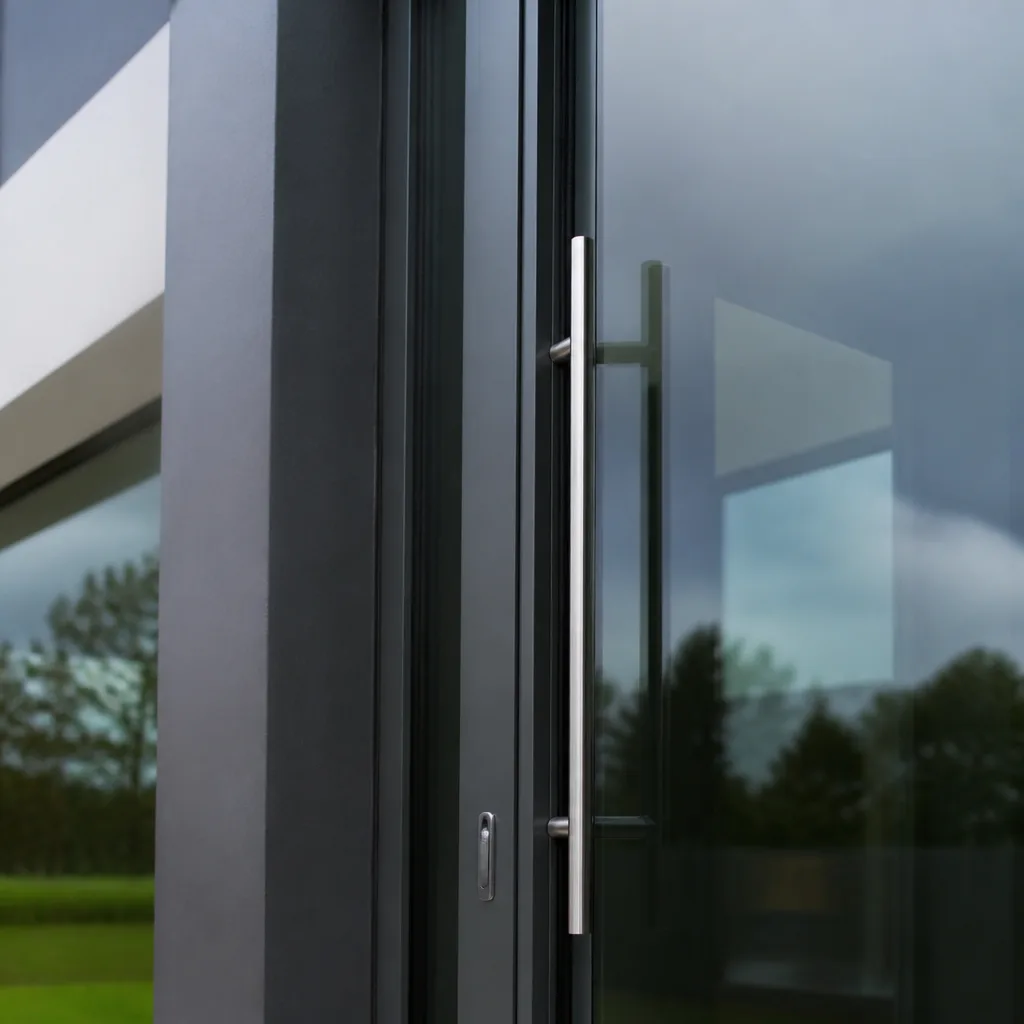
- Using pressure washers on windows: The high-pressure stream forces water past weatherstrip into the wall cavity and can delaminate impact glass edges. We’ve traced multiple Miramar water damage claims to this single practice.
- Applying car wax to aluminum frames: Carnauba and synthetic waxes contain petroleum distillates that degrade anodized finishes and attract airborne contaminants. The temporary shine accelerates long-term damage.
- Ignoring screen frame corrosion: Corroded screen frames drop oxide particles onto glass and sill, then stain both. Screen replacement costs less than glass restoration or replacement.
- Using the wrong lubricant seasonally: Homeowners who switch to “heavier” grease for summer humidity often select petroleum products that attack seals. Stick with specified products year-round.
- Cleaning glass in direct sun: In Miramar’s summer, glass surface temperatures exceed 140°F. Cleaner evaporates before wiping, leaving streaks and chemical residue that etch coatings over time. Clean early morning or late afternoon only.
- Failing to document pre-existing conditions: Without installation-day photos, warranty claims for finish failure become manufacturer versus homeowner disputes with no objective evidence. Document everything.
- Assuming new windows are maintenance-free: Even premium lines from PGT and ECO Window Systems require scheduled care. “Maintenance-free” marketing refers to specific components, typically vinyl color-through frames, not the complete assembly.
When to Call a Professional
Some maintenance tasks exceed homeowner scope or involve safety risks. Call a qualified window professional for: broken or delaminated glass in any impact-rated unit (compromised structural integrity), multi-point lock mechanism failure requiring disassembly, sealant replacement on second-story or higher elevations, frame corrosion that has progressed past surface oxidation to pitting or structural weakening, and water intrusion with no identifiable weep blockage.
Sightline Windows & Doors Miramar offers free estimates in Miramar. Our technicians are background-checked, uniformed, and identified by license number before arrival, per Haven Clause 3. Every evaluation includes a written scope and price before any work begins, and leaves a documented photo record. Call (754) 260-1468 to schedule.
Frequently Asked Questions
Every 90 days for the frame and hardware inspection, with monthly weep hole testing during hurricane season from June through November. Miramar’s coastal salt exposure advances corrosion faster than annual inspection cycles can catch. The 90-day protocol aligns with actual degradation rates we’ve measured across Broward County installations.
No. White vinegar solution is acceptable for occasional mineral deposit removal on impact laminate glass, but prohibited for routine cleaning of Low-E coated surfaces. The acidity degrades the metallic coating and voids energy performance warranties. Use pH-neutral cleaner for all routine cleaning, or maintain separate products for different glass types.
Professional inspection and maintenance service for a typical Miramar home with 15-20 openings ranges from $280-$450 for annual service, including hardware lubrication, weep cleaning, weatherstrip assessment, and documented condition report. Repairs or component replacement are quoted separately with written prices before work begins. Call (754) 260-1468 for an exact quote on your home, estimates are free.
At Sightline Windows & Doors Miramar, no. Haven Clause 1 requires the written price and the final invoice to match. We measure, specify the scope, and name the price before any work starts. If we encounter concealed damage during service, we document it, stop work, and provide a revised written scope for your approval. No surprises.
Yes. The laminate interlayer in impact glass requires pH-neutral cleaning chemistry to prevent edge delamination. Multi-point locking systems need specific silicone lubricants, petroleum products attack the seals. The hardware is heavier-duty and requires more frequent lubrication due to higher operating loads. Standard window maintenance advice often omits these distinctions.
Surface oxidation, white chalky residue without pitting, can often be cleaned with baking soda solution and protected with manufacturer-approved touch-up. Active pitting, red rust on steel components, or structural weakening of aluminum requires professional evaluation. In Miramar’s salt air, pitting progresses rapidly once started. Call (754) 260-1468 for a documented assessment, estimates are free.
The Bottom Line
Miramar’s coastal environment demands a maintenance schedule tighter than generic Florida guidance suggests. Inspect every 90 days for salt-air oxidation. Test weep holes monthly during storm season. Clean impact laminate with pH-neutral products only. Lubricate multi-point hardware with silicone, never petroleum grease. Maintain a photo baseline from installation day for warranty protection. These practices extend service life and preserve the performance you paid for, whether your windows are two years old or fifteen. For Windows & Doors Cost Breakdown: The Miramar Homeowner’s Reference for 2026, see our detailed pricing guide.
For homeowners without installation documentation, or those uncertain about current condition, a professional evaluation establishes the baseline. Explore more guides & resources on window care and home protection. Sightline Windows & Doors Miramar provides written prices before any work starts, documented photo records on every visit, and the 365-Day Done Right Promise on all service. Call (754) 260-1468 to schedule your free estimate.
Written by Sonia Raman, Owner at Sightline Windows & Doors Miramar, serving Miramar since 2012.
Six Reasons Homeowners Choose Sightline Windows & Doors Miramar

Impact systems engineered to design pressures up to +/-100, matched to your wind zone - your openings hold when the storm arrives.
Low-E insulated impact glass from our manufacturer lines commonly cuts monthly cooling bills 20-30%.
Laminated impact glass shuts out up to 40% of outside noise - traffic, neighbors, weather.
Monitoring services run $30-90 a month. Laminated impact glass resists forced entry around the clock, with no subscription.
Florida homeowners average around 25% savings on the windstorm portion of their policy after protecting every opening - some homes qualify for more.
A full impact package upgrades curb appeal, buyer confidence and appraised value in one project.
Other Sightline Windows & Doors Miramar Services
What Neighbors Say About Sightline Windows & Doors Miramar